
Face Rituals (Mukha)
The Art of Vedas face ritual in four steps: cleanse, nourish, massage and protect. Explore Ubtans, Kumkumadi oils, Kansa facial tools and herbal creams for a complete Ayurvedic skincare routine.
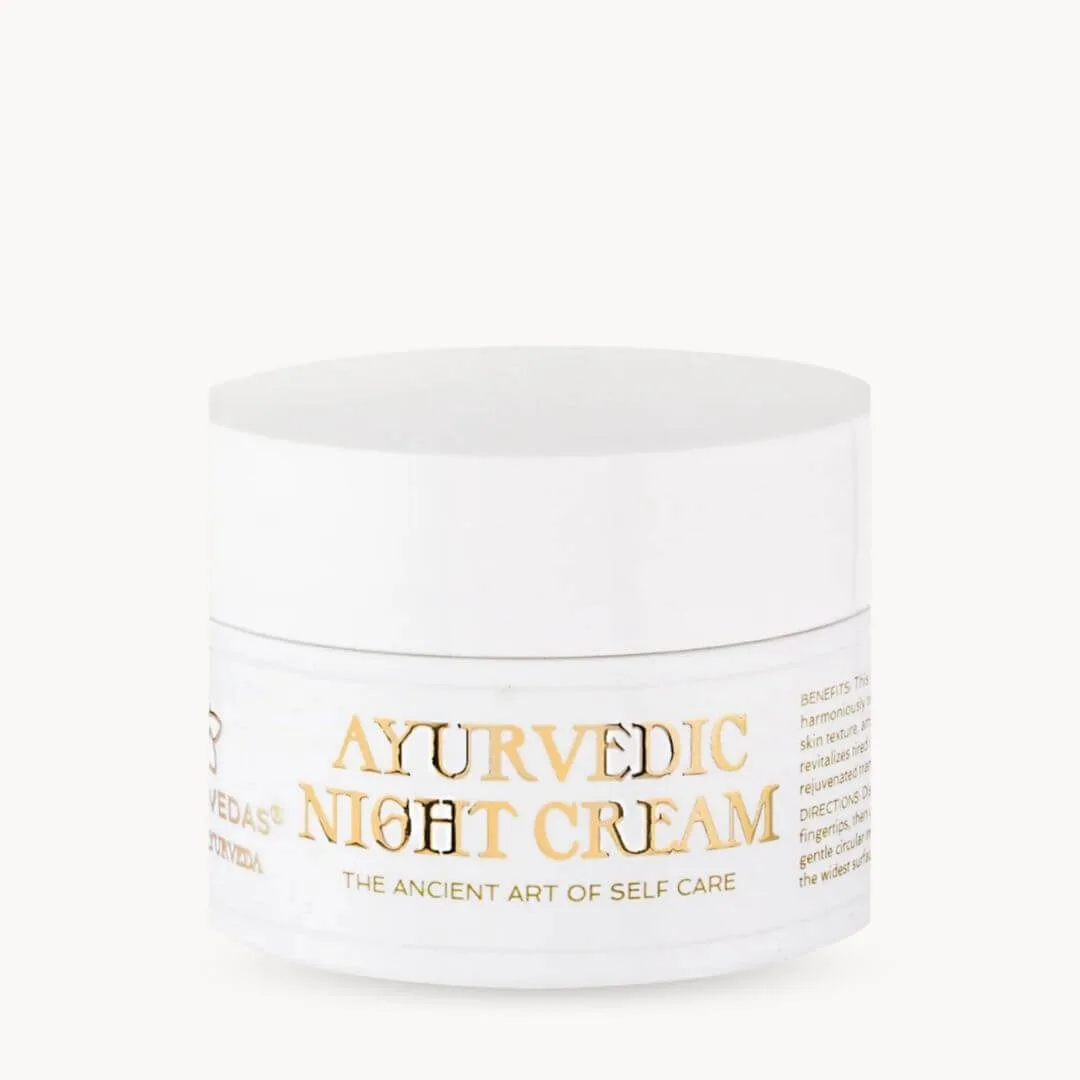
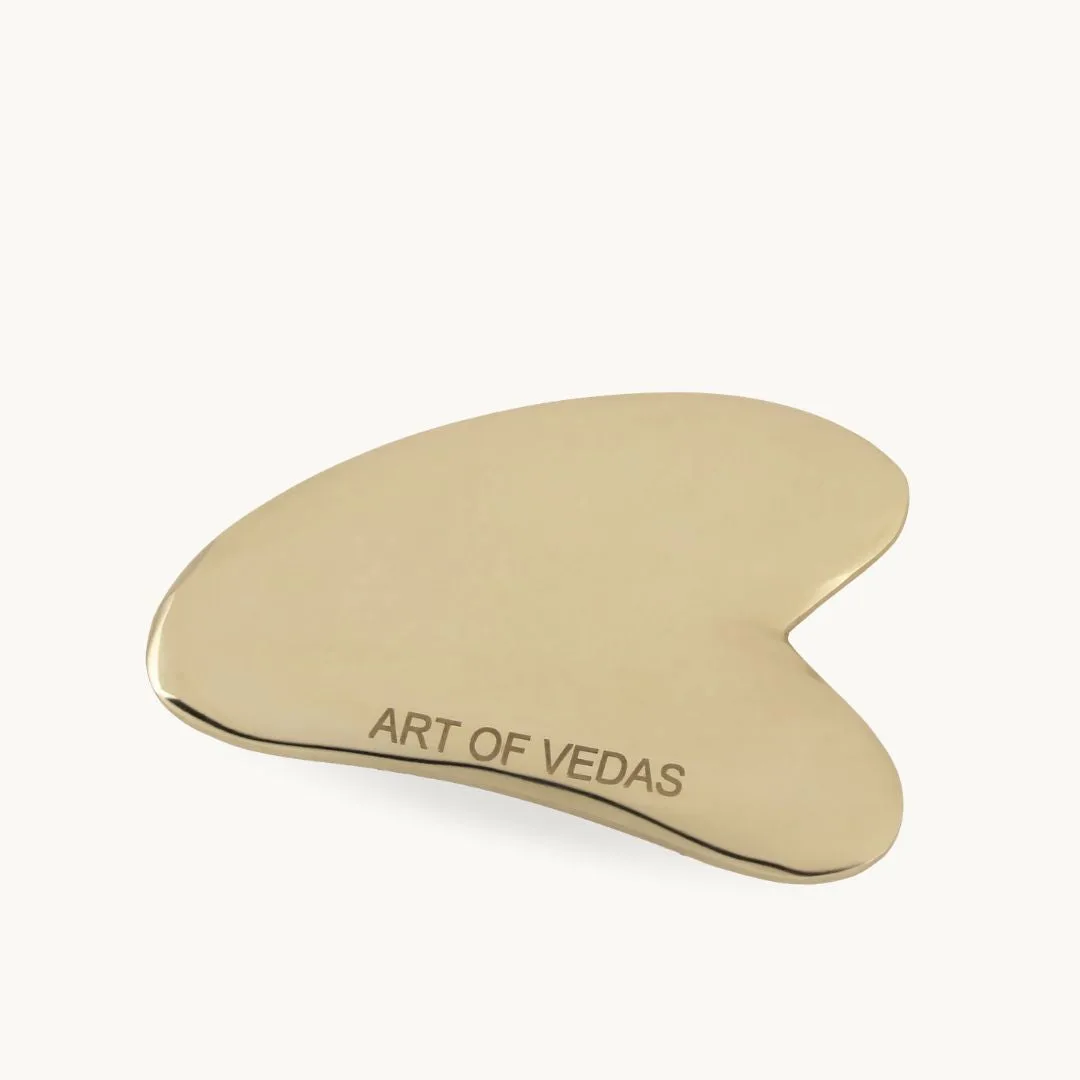
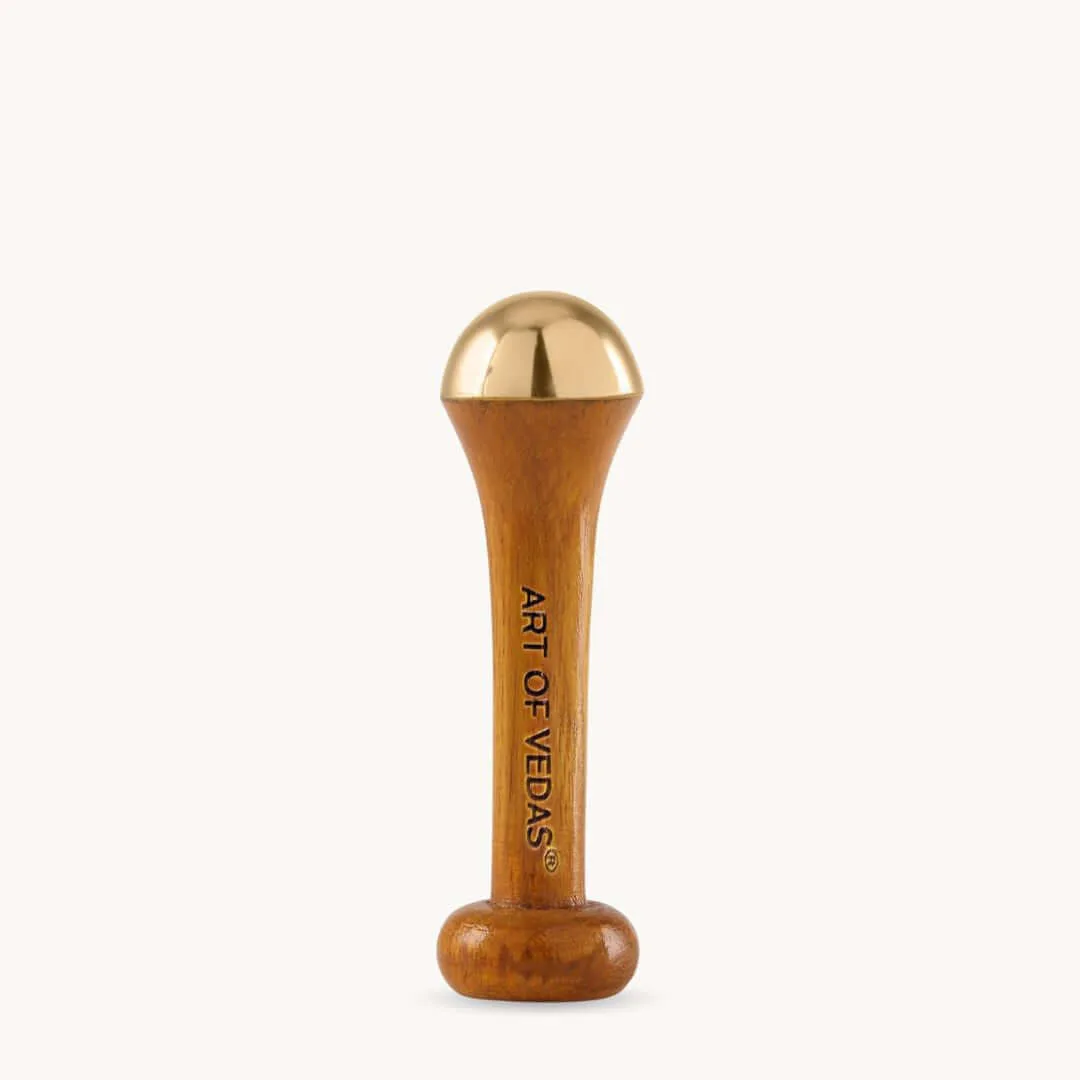
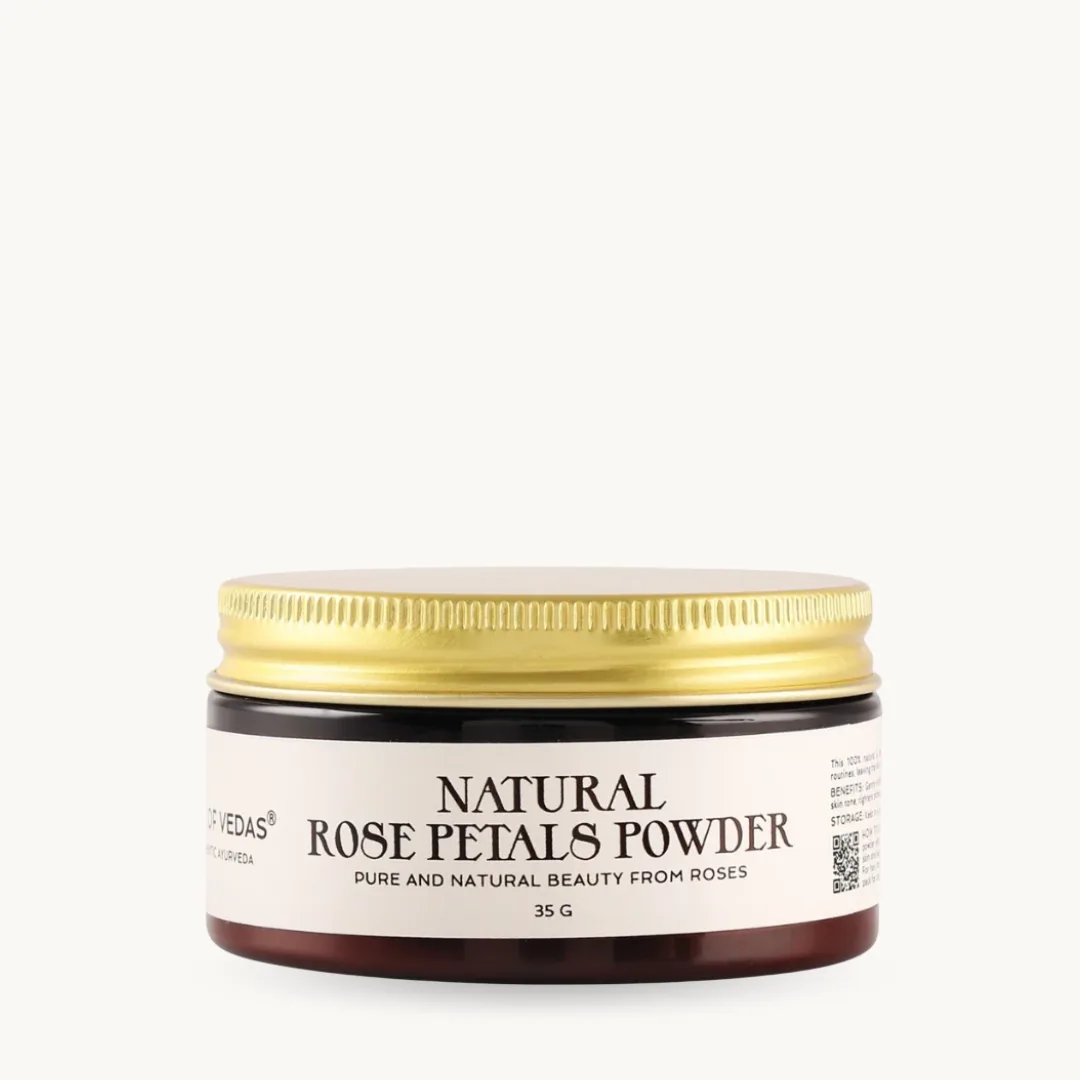
The face as it is cared for in Ayurveda
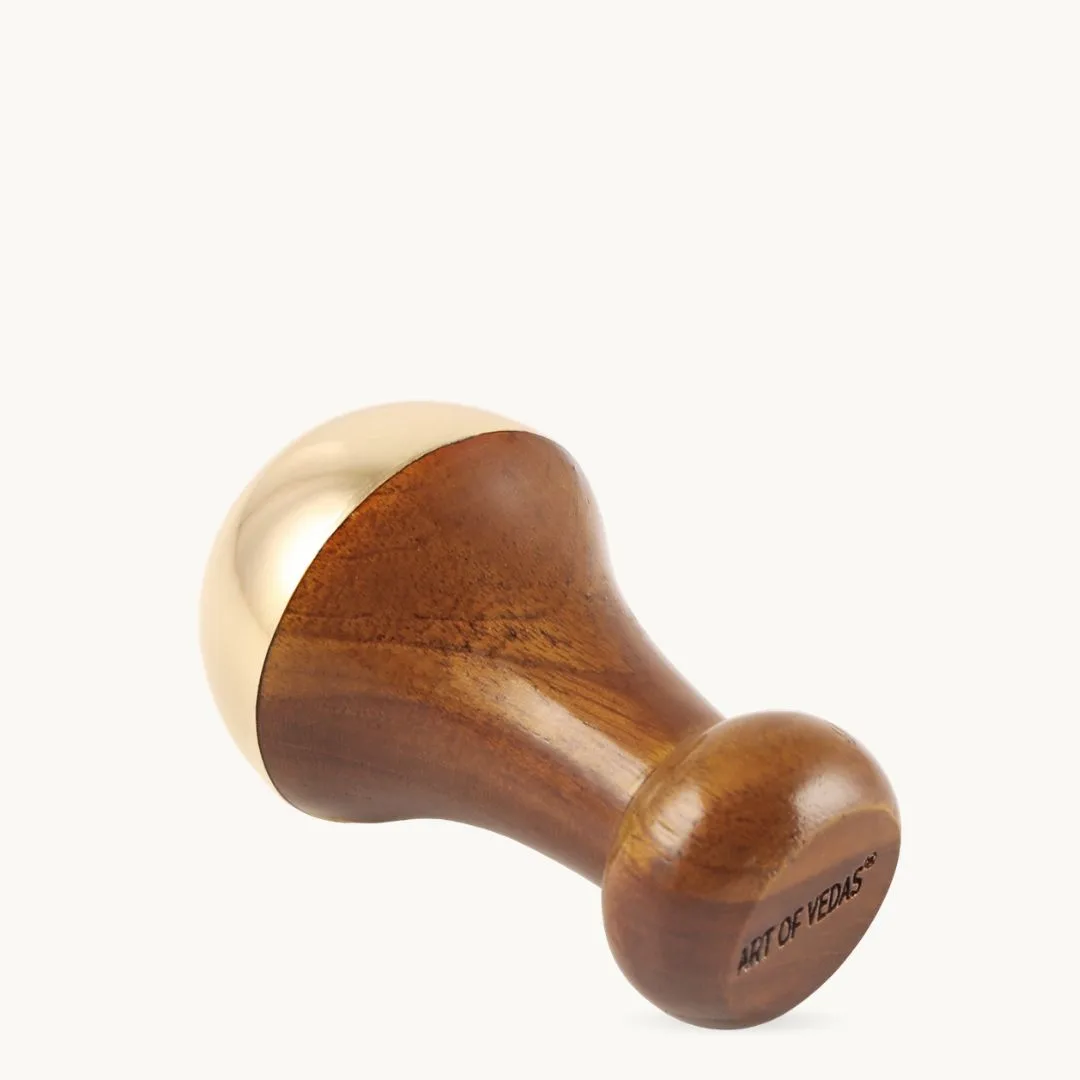
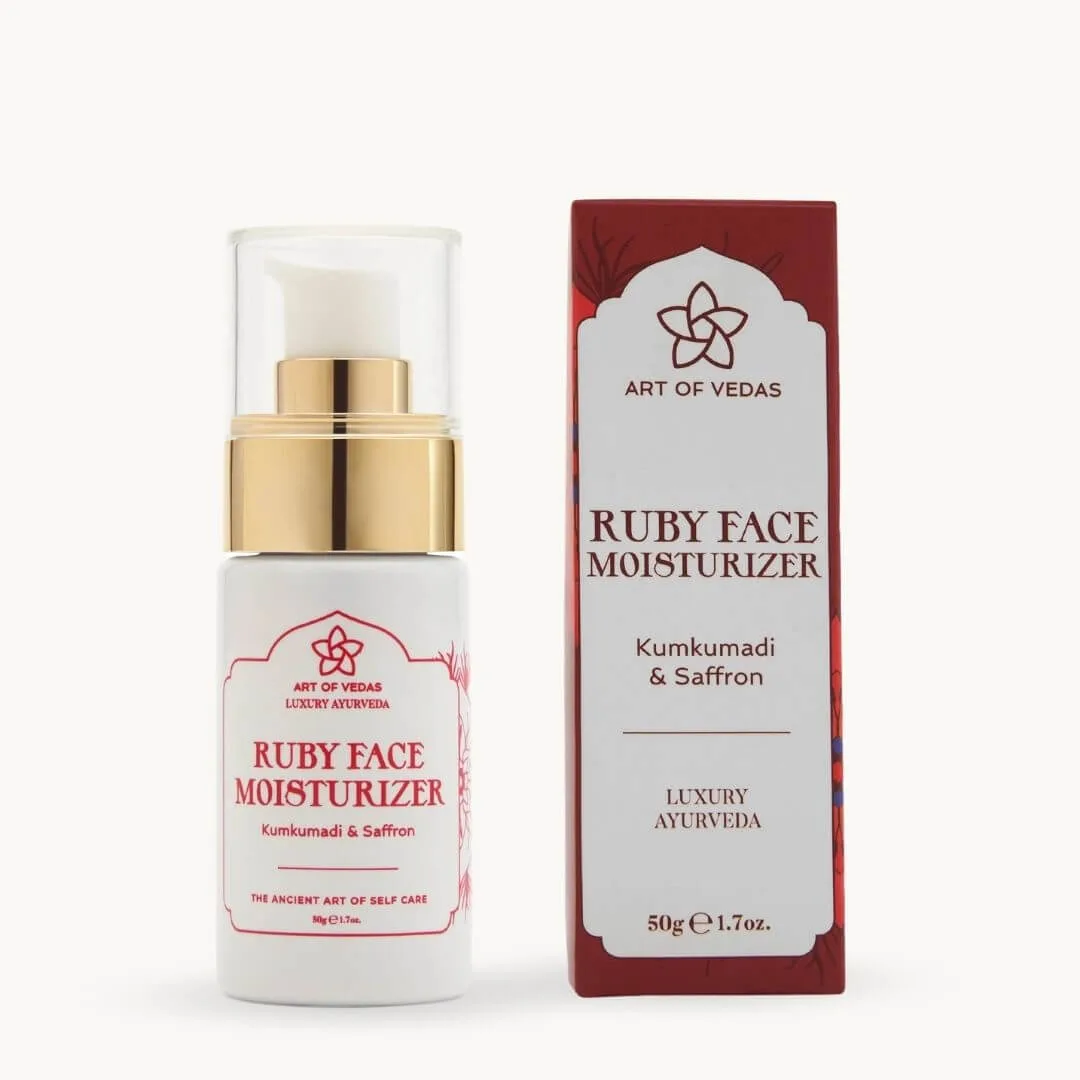
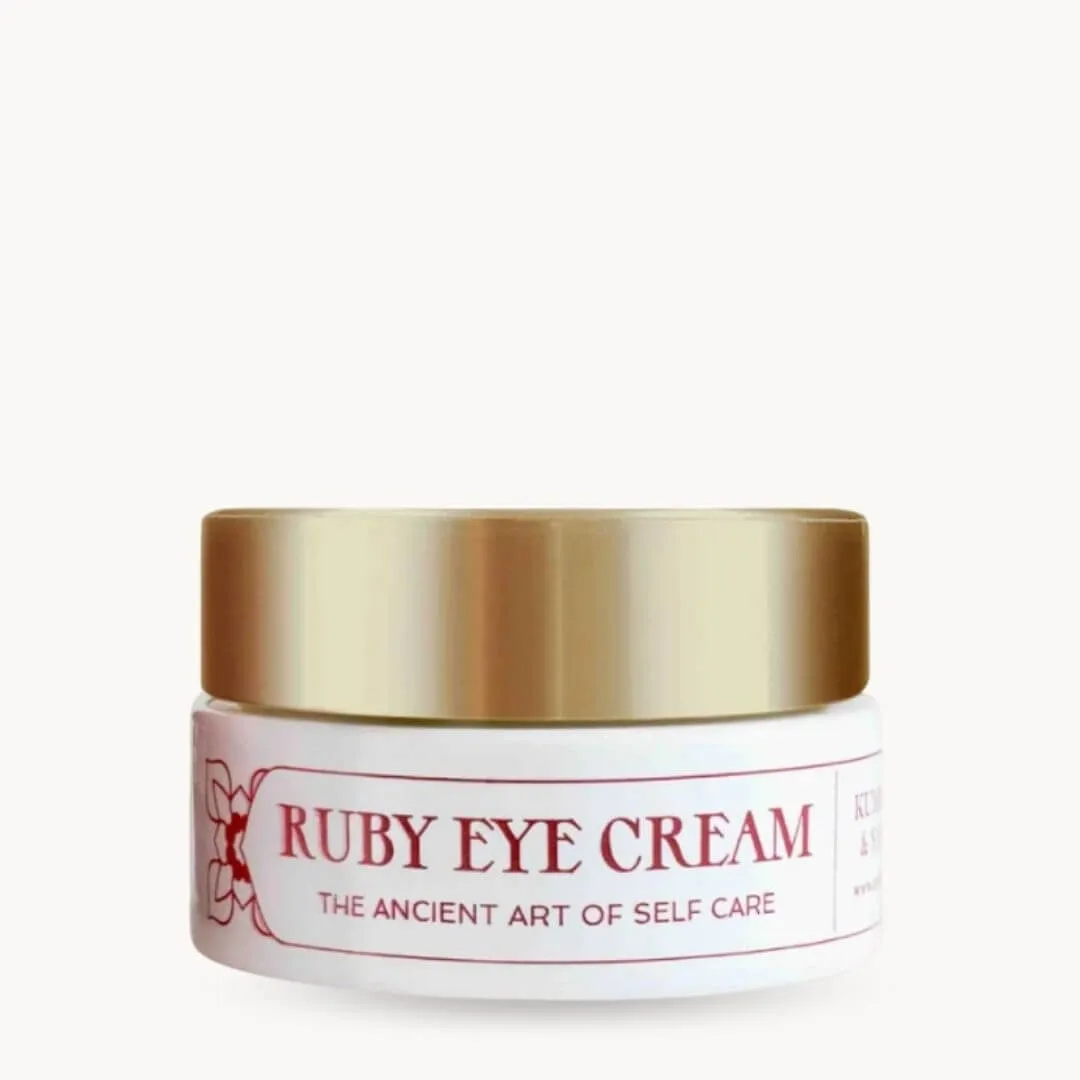
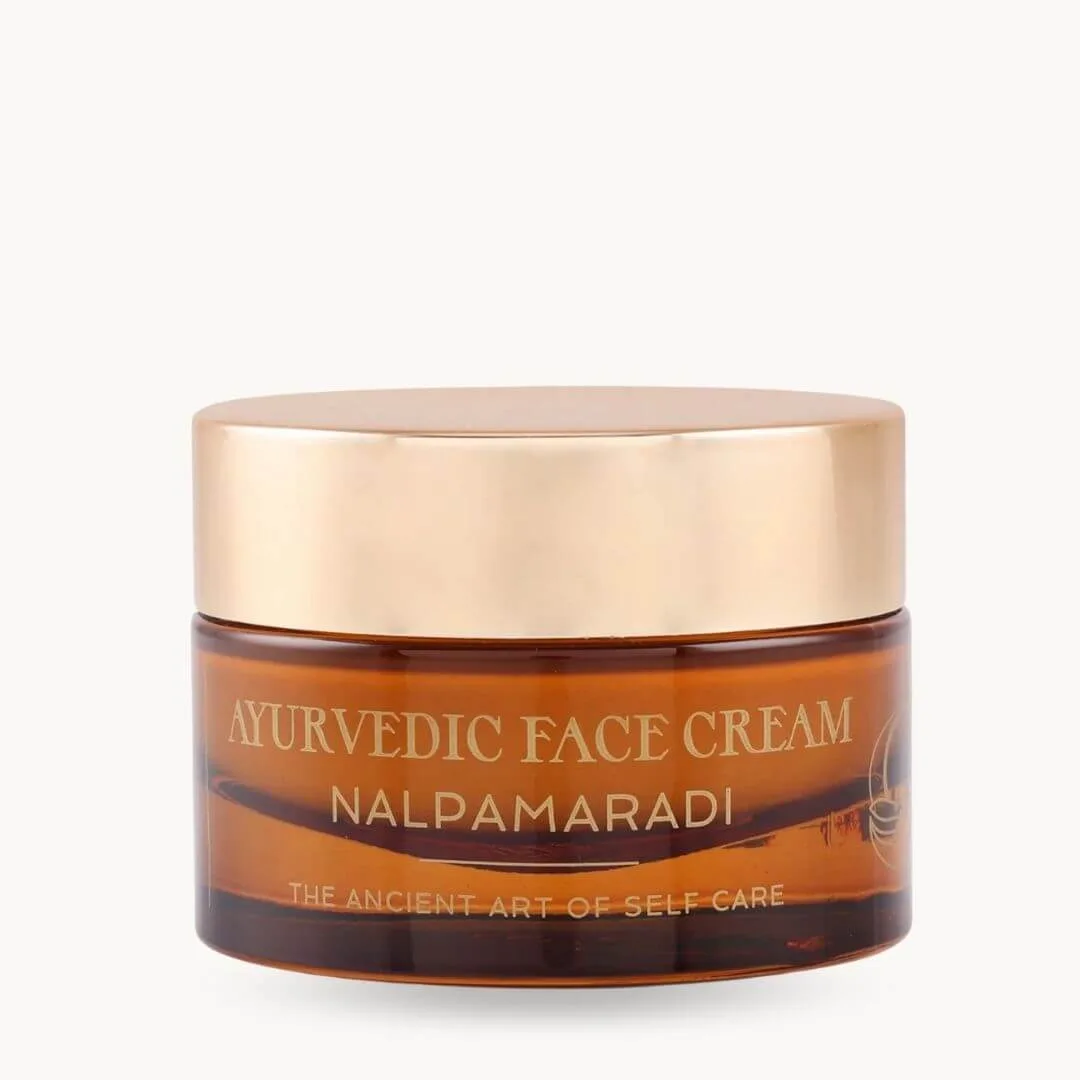
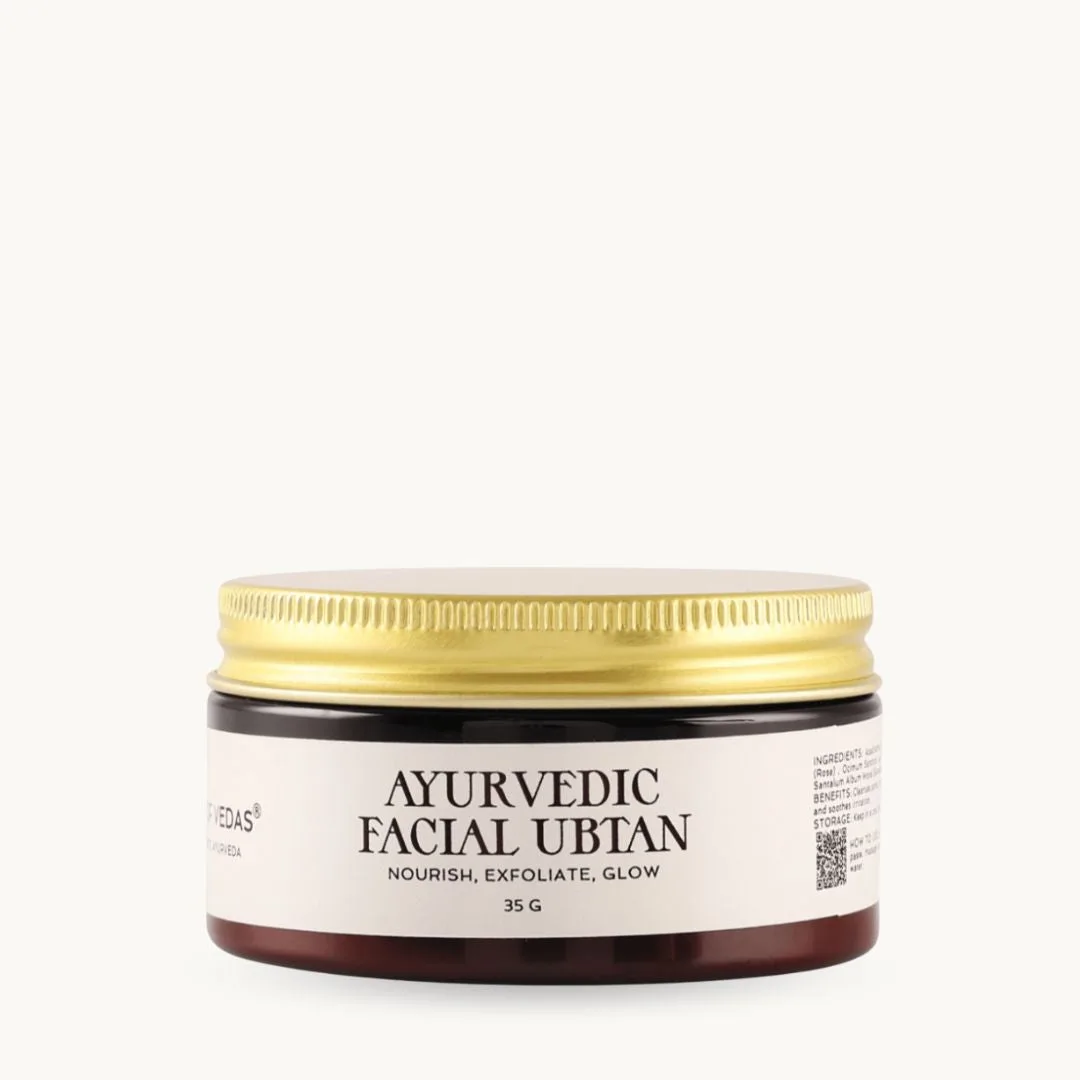
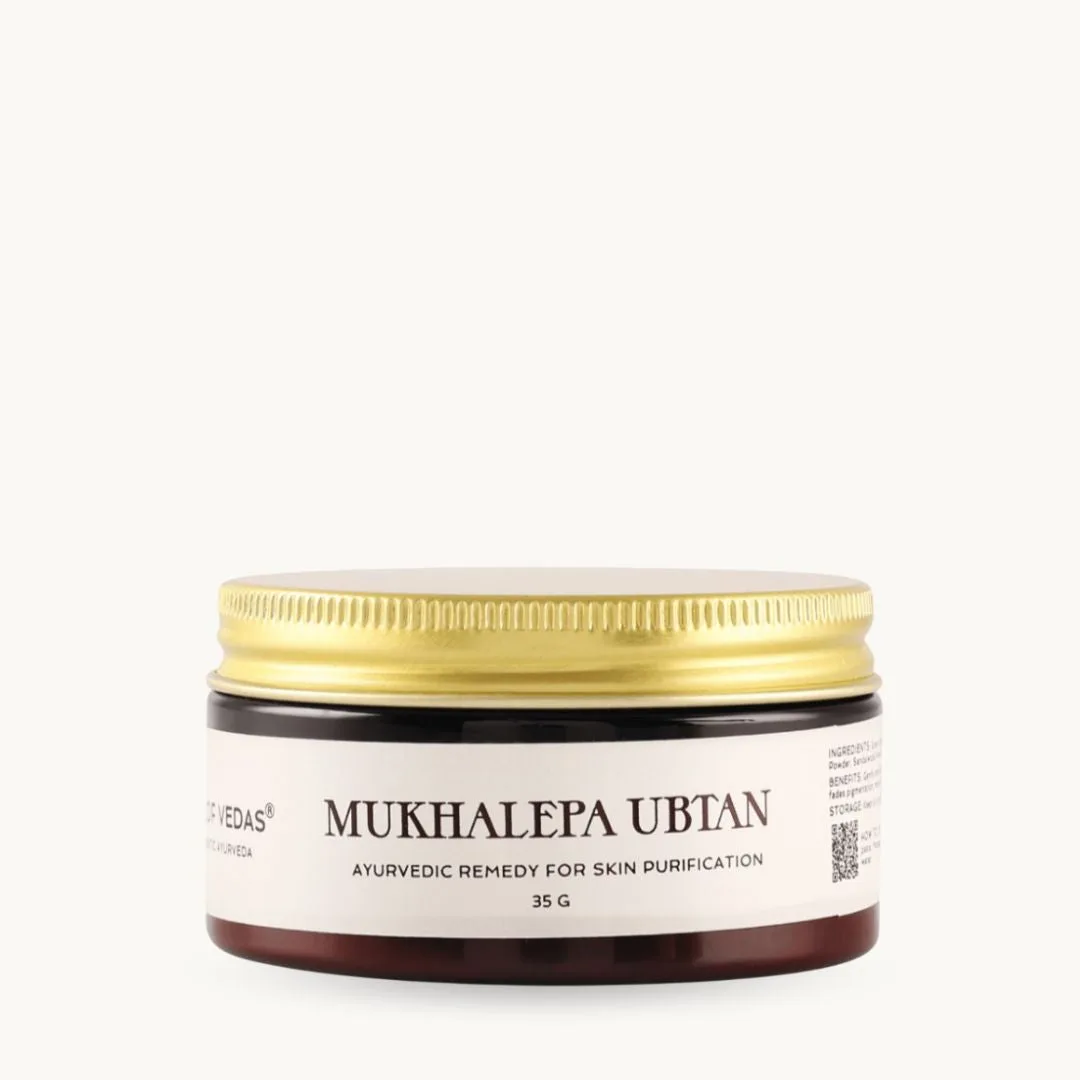
Ayurvedic skincare gathers the preparations and tools that classical Ayurveda devotes to the face (Mukha): Ubtan cleansing powders, Kumkumadi facial oils and serums, herbal creams, and the polished Kansa tools used for facial massage. The approach follows a simple, unhurried order that has been kept for centuries, cleansing with a herbal Ubtan, nourishing with an oil or cream, and massaging with a Kansa wand to settle the skin. To choose within it, begin with your skin's tendency rather than a single concern: drier, cooler skin (a Vata leaning) tends to welcome richer oils and creams, while warmer, more reactive skin (a Pitta leaning) often prefers the cooling, calming preparations such as rose and Kumkumadi. A few of these pieces, like a single Kansa wand and one Ubtan, are enough to begin, and you can add an oil or cream as your Dinacharya (daily routine) takes shape.
Questions about Ayurvedic skincare
What does an Ayurvedic skincare routine actually involve?
In classical Ayurveda the care of the face follows a calm, repeatable order rather than a long list of steps. You cleanse with a herbal Ubtan, nourish the skin with a facial oil or cream, and then massage gently, often with a Kansa tool, to leave the face settled and bright. Most people keep it to two or three pieces and practise them as part of their Dinacharya (daily routine).
What is Ubtan, and how is it different from an ordinary cleanser?
Ubtan is a traditional Ayurvedic cleansing powder made from finely milled herbs, pulses and roots that you mix to a paste with water, milk or rosewater just before use. Unlike a ready-made foam or gel, it is dry in the jar and activated only when you need it, which is why these powders are offered in their unmixed form. You work the paste over damp skin and rinse, and it both cleanses and gently smooths.
What is Kumkumadi, and where does it sit in the routine?
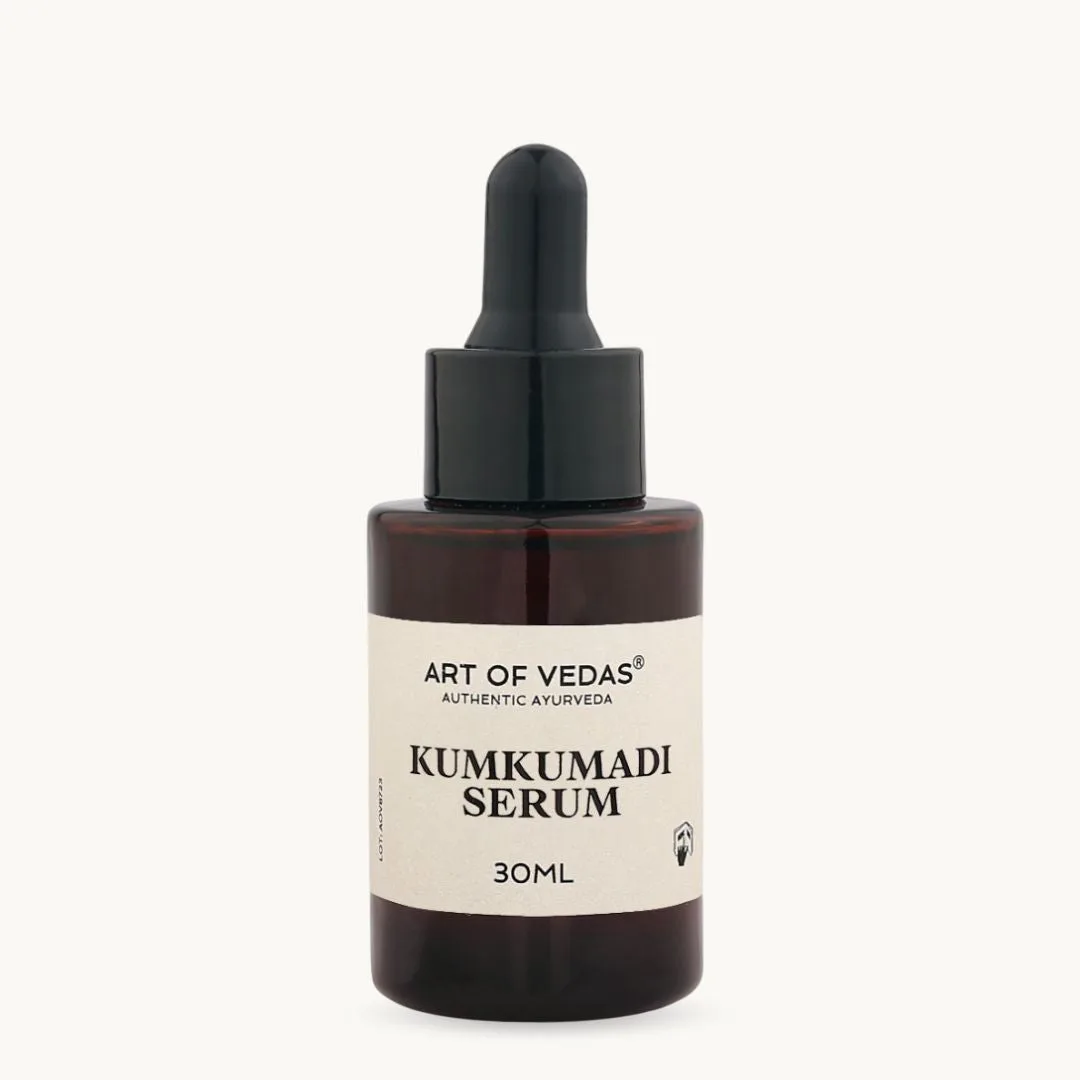
Kumkumadi is a classical Ayurvedic facial oil preparation long valued for brightening and evening the complexion, traditionally regarded as cooling and calming for the skin. It belongs to the nourishing step, applied to clean skin in the evening, often with a few drops pressed in by hand or worked in with a Kansa wand. Because it is concentrated, a small amount is enough, which is why it is sold in modest sizes such as 30ml.
What is a Kansa wand for, and how do I use it?
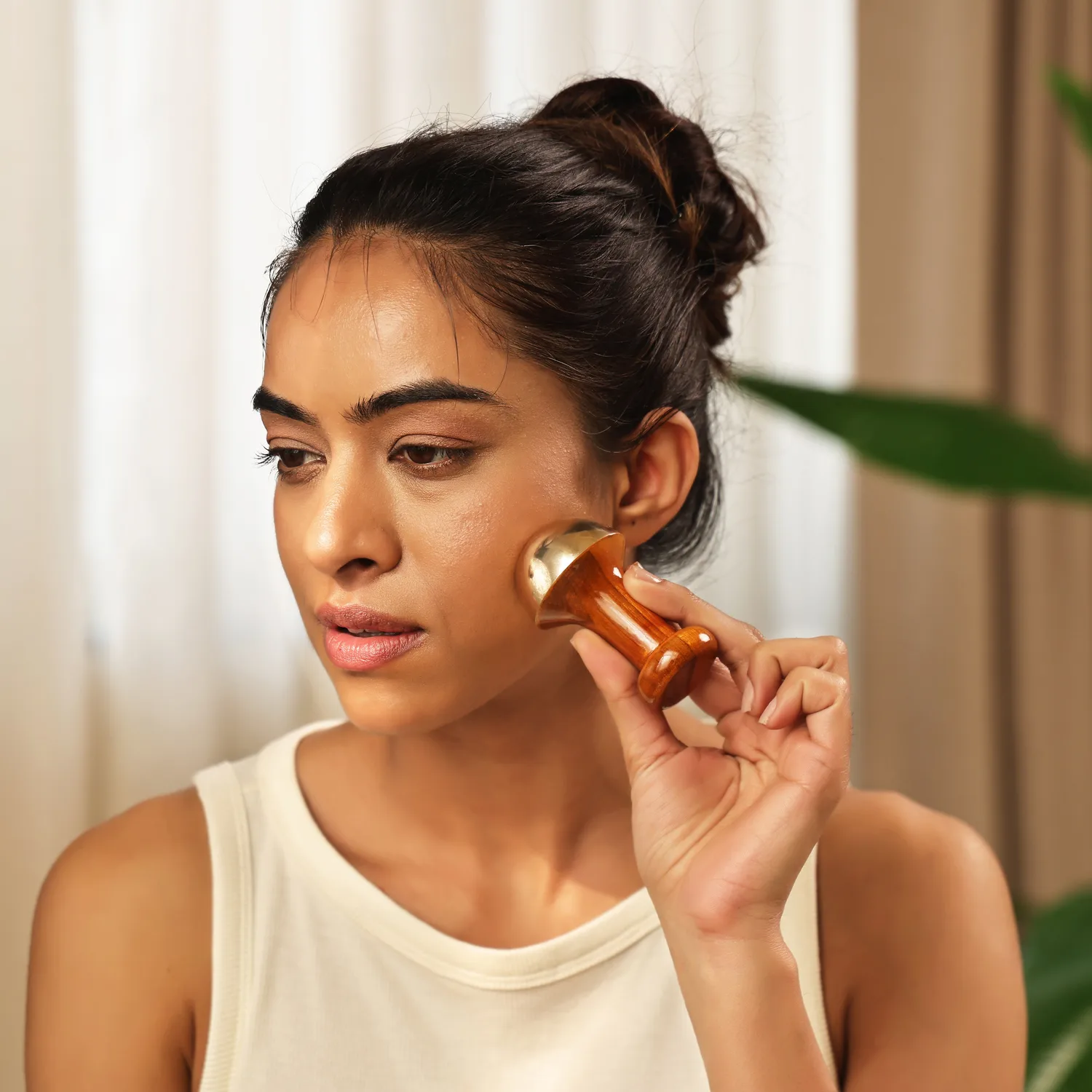
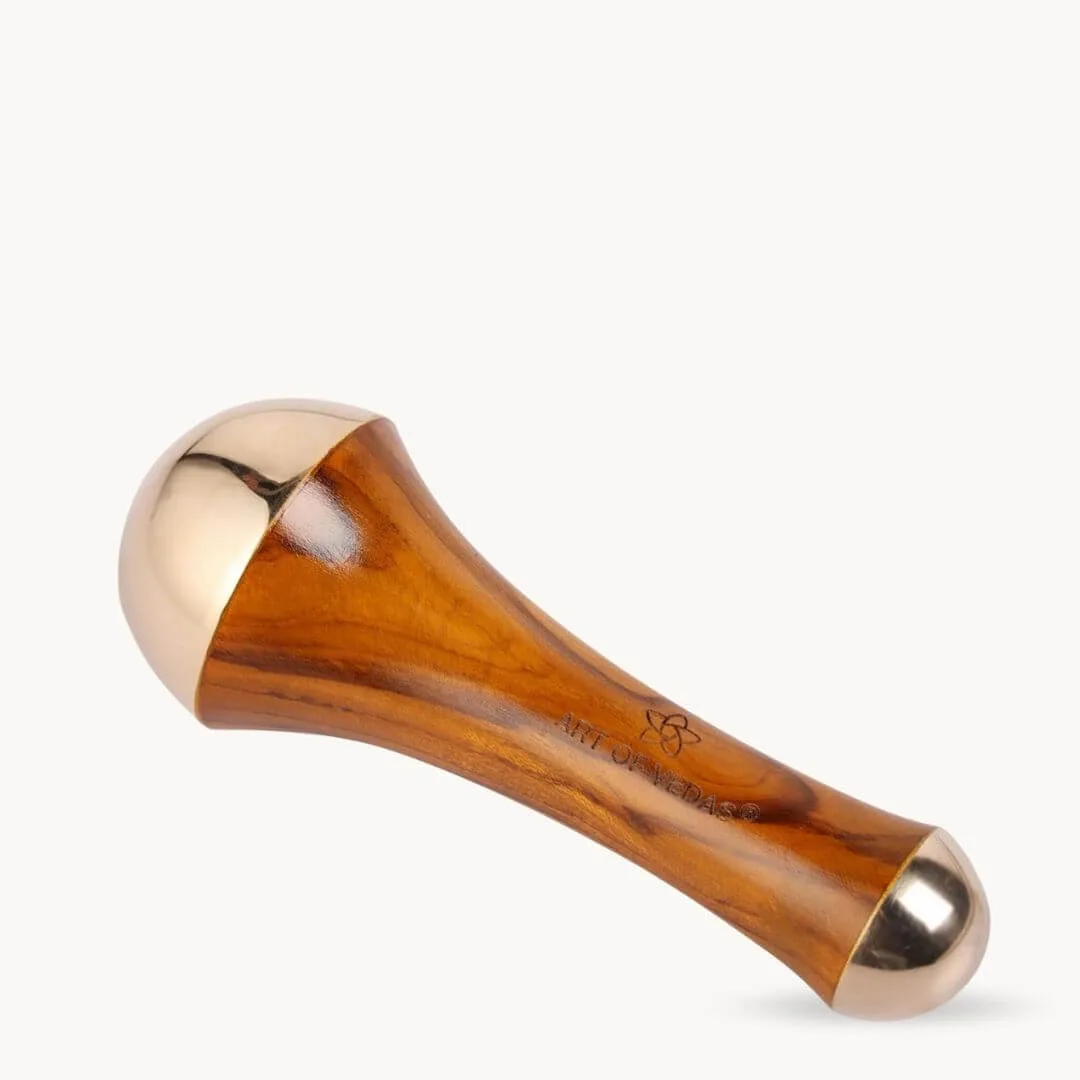
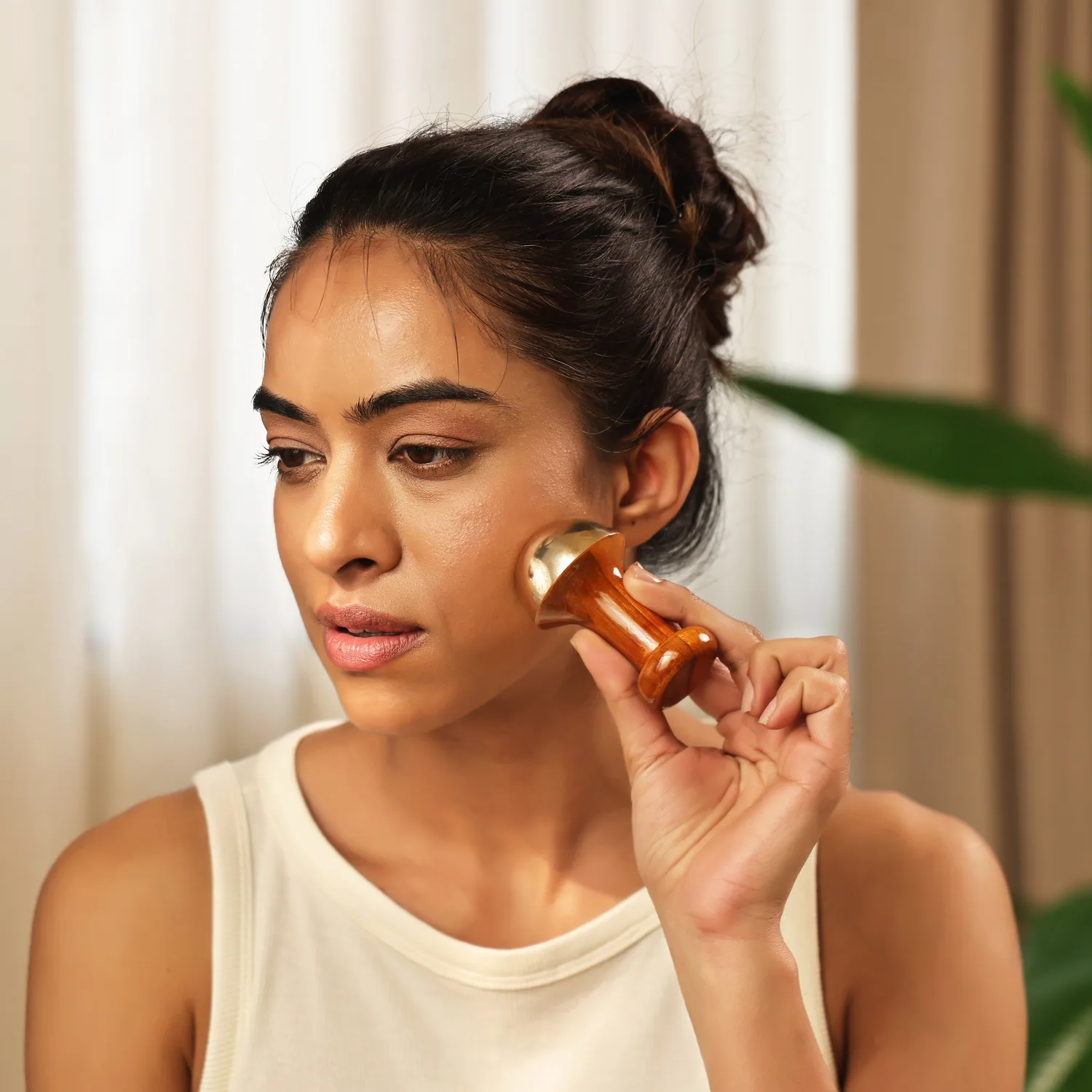
Kansa is a traditional bronze alloy, and a Kansa wand is the polished tool used in Ayurveda for Marma facial massage, the gentle working of the face's energy points. After applying an oil or cream, you glide the dome over the skin in slow, light strokes for a few minutes, which many people find grounding at the end of the day. The mini wand suits the area around the eyes, while the double-sided and Marma wands cover the wider face and jaw.
How do I choose between an oil, a cream and a serum here?
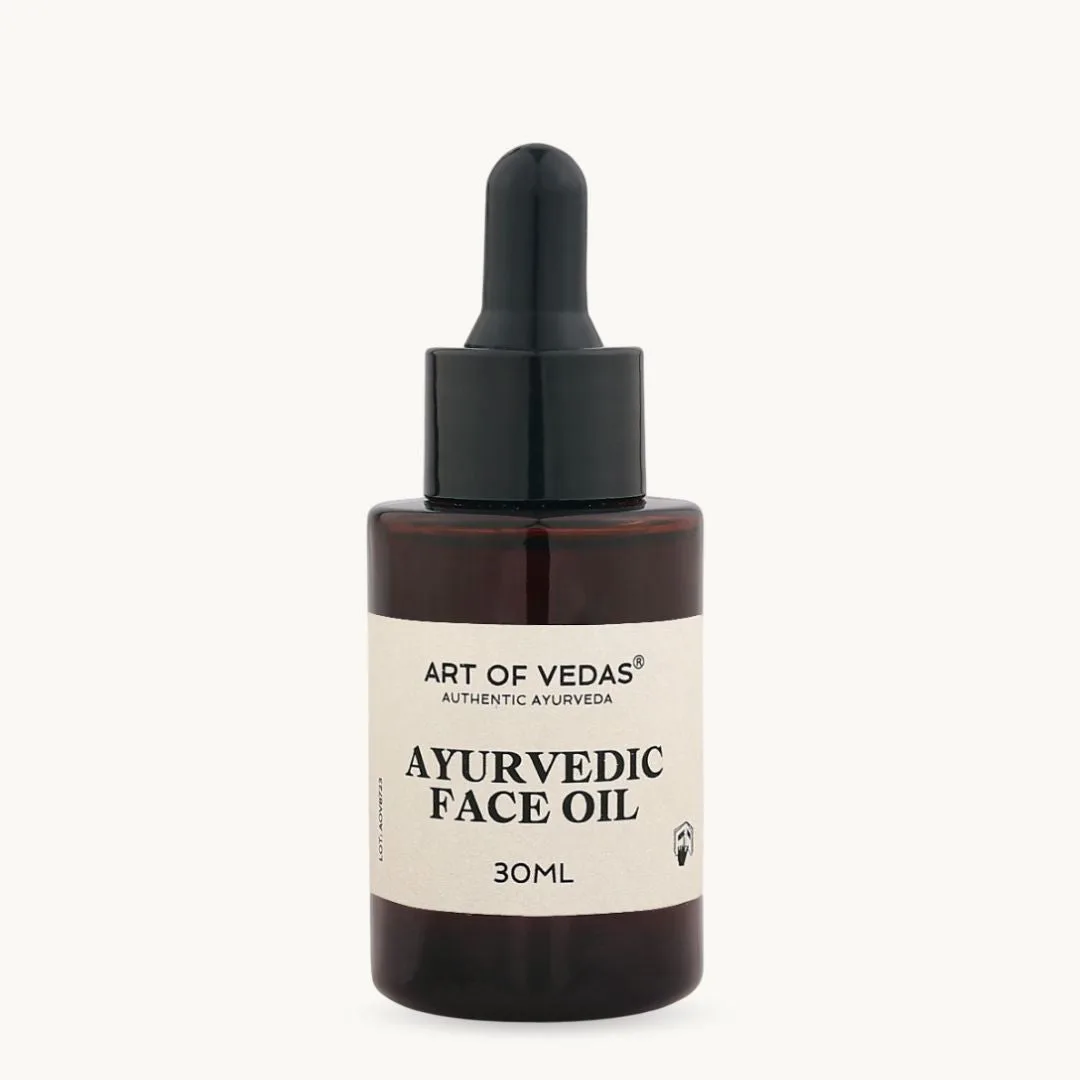
Think first of your skin's tendency. Drier, cooler skin that leans towards Vata usually prefers the richer creams and facial oils, while warmer, more easily reddened skin that leans towards Pitta tends to be more comfortable with the lighter, cooling preparations such as rose and Kumkumadi. A serum or face oil is a good place to begin if you want one nourishing step, and a night cream can be added when the skin asks for something more substantial in the evening.
How should I store these preparations, and how long do they keep?
Keep the oils, serums and creams in a cool place away from direct sunlight, and close the lids firmly so the preparations stay fresh. The herbal Ubtan powders should be kept dry, with the spoon and your fingers dry too, since any water left in the jar will shorten their life. The Kansa tools need only a wipe with a soft, dry cloth after use, as standing moisture can dull the bronze over time.